THE SET
Exactly four couples
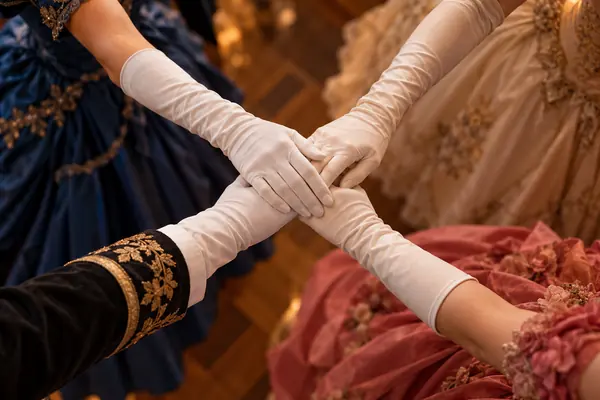
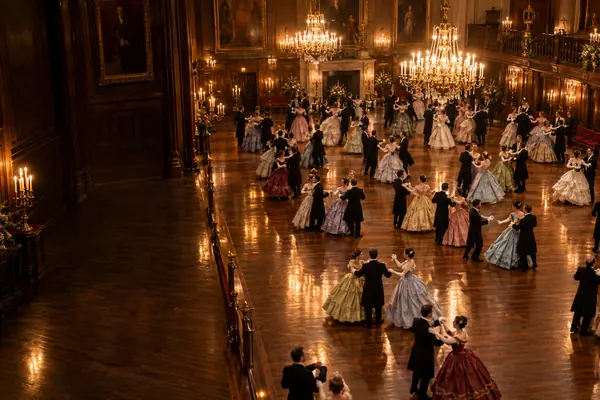
Routledge's manual says that, unlike the common quadrille, the Lancers must be danced by four couples only in each set: top, opposite and sides.
Walk the figures doodlelancer
A BALLROOM DANCE EXPLAINED
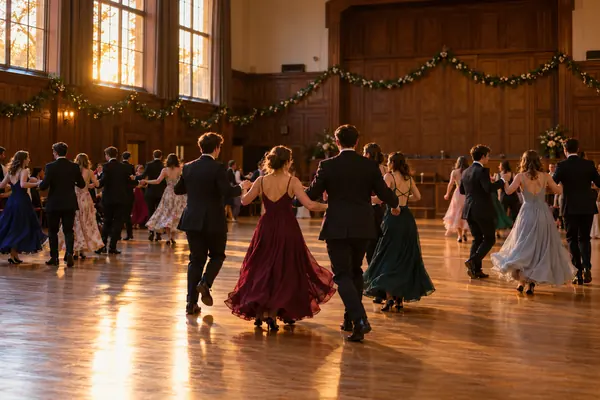
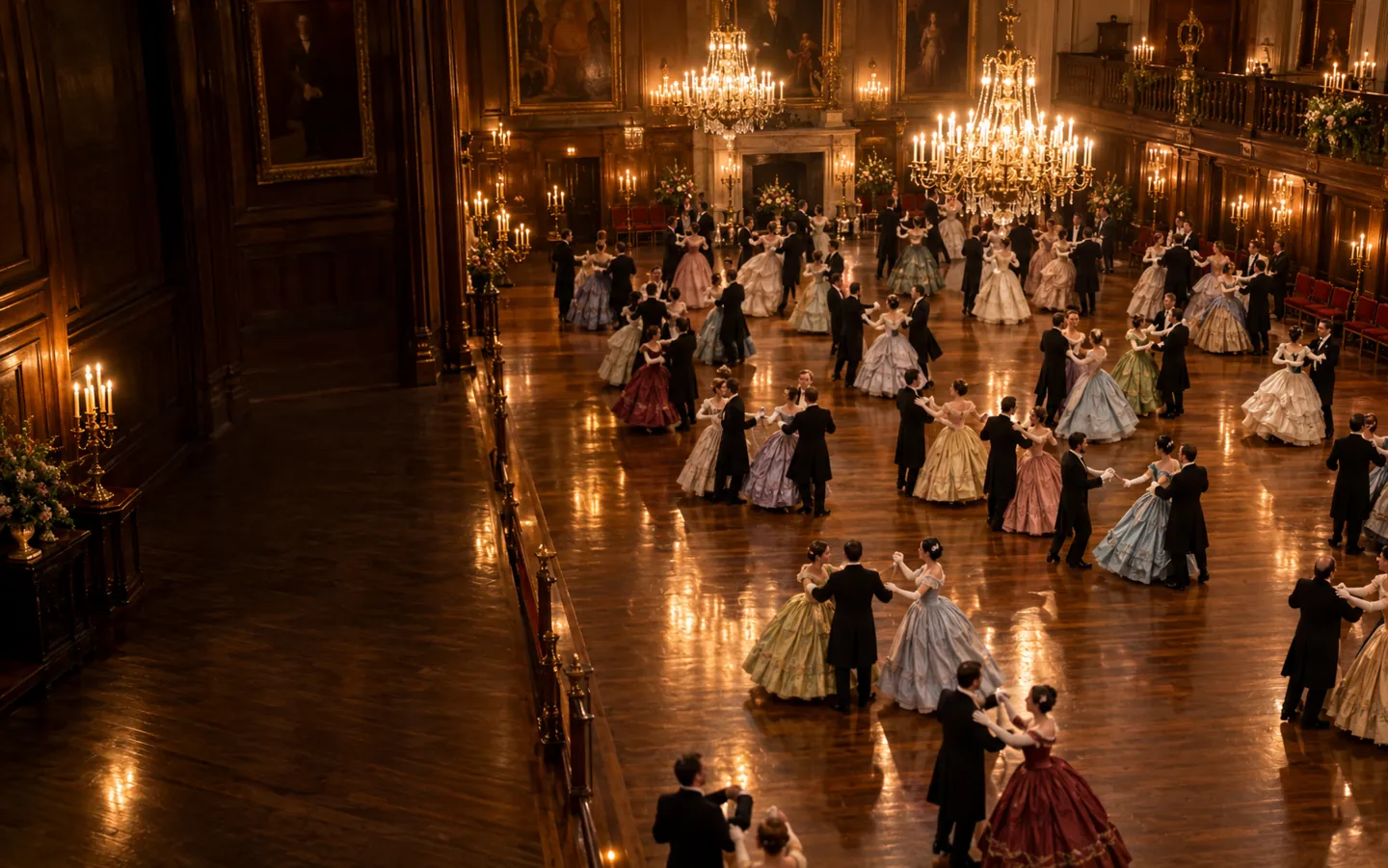
The Lancers is a square dance in a ball gown.
A Victorian etiquette manual called it perhaps the most graceful and animated of the quadrilles, and warned that one dancer who did not know the figures could confuse the whole set.
1817 first danced in Dublin
Walk the figuresTHE SHORT ANSWER
Unlike a waltz, the Lancers is about where you go,
not how you step. Everyone must know the pattern.
THE SET
Routledge's manual says that, unlike the common quadrille, the Lancers must be danced by four couples only in each set: top, opposite and sides.
Walk the figuresTHE FIGURES
Each figure is built from eight-bar phrases: advancing and retiring, crossing, hands across in a star, bows and the grand chain.
See the numbersTODAY
A University of Copenhagen researcher told videnskab.dk that Denmark is the only country where Lanciers is danced as a matter of course, at school parties.
Where it lives on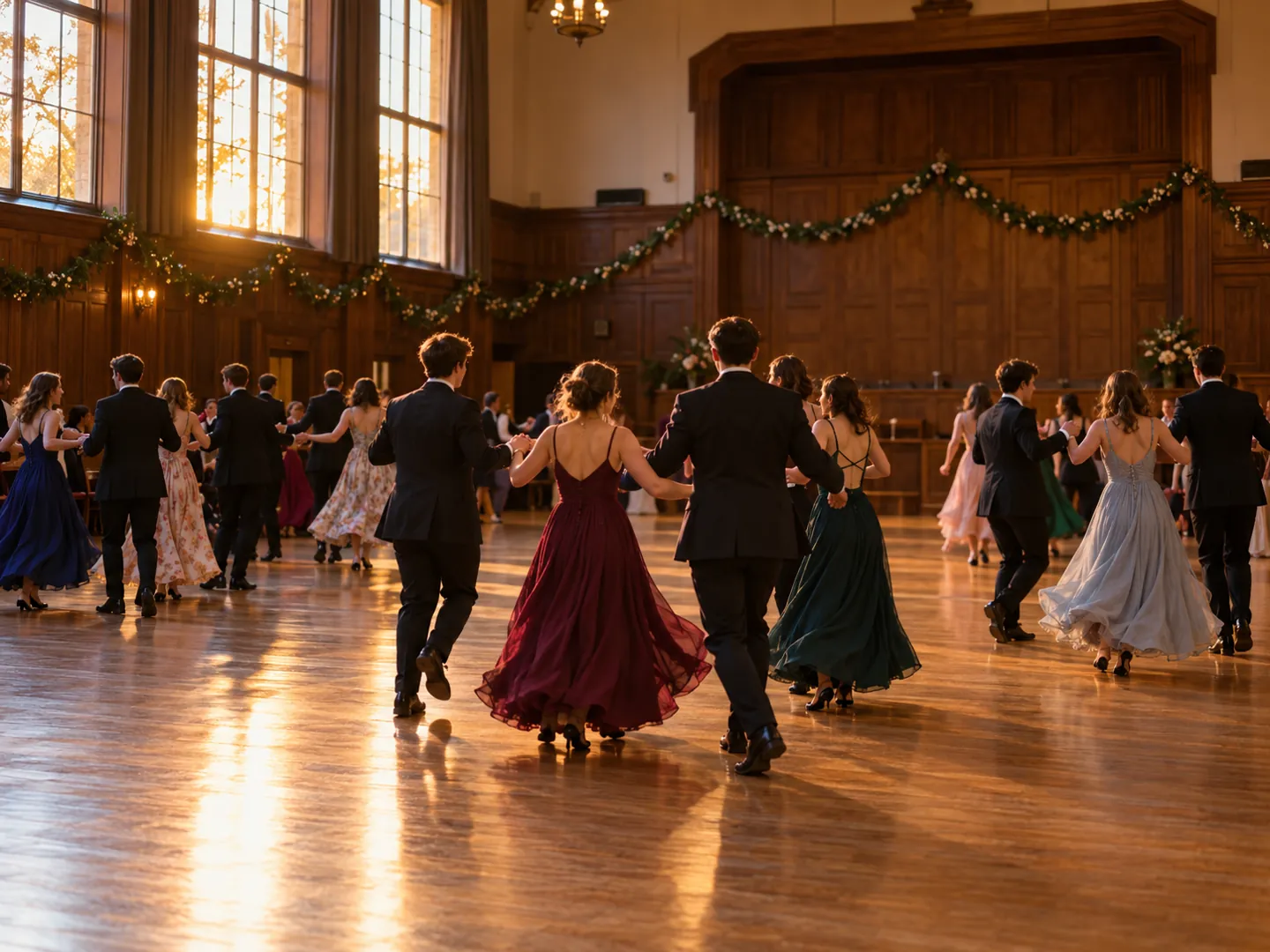
FOUR TIPS FROM THE MANUAL
The Victorian advice still works at any historical or folk dance evening. It is about the pattern and the music, not fancy footwork.
Sets are top, opposite and sides. The couple on the right of the top couple always goes next.
Each move fills eight bars. Walk the figure rather than performing steps; the manual says steps had gone out of fashion.
The fifth figure begins on the first note. If anyone starts late, the manual warns, the figure becomes hopelessly tangled.
The third figure's curtsey takes a bar or two of music. The manual suggested practising it beforehand.
TWO NUMBERS WORTH KNOWING
One number from the Victorian manual,
one date from the dance's beginnings.
8 bars
Bars of music in each part of a quadrille figure
The manual says quadrille music is divided into eight bars for each part of the figure, with two steps in every bar. The Lancers' grand chain takes sixteen bars.
THE MUSIC · ROUTLEDGE
1817
Year the Lancers' Quadrilles were created
Videnskab.dk reports the dance was created in 1817 for a court ball in Dublin, with music drawn largely from the opera hits of the day, then rearranged as it spread across Europe.
THE START · VIDENSKAB.DK
Routledge's manual credits the dance's revival in fashionable circles to the state balls of Queen Victoria. Videnskab.dk says that outside Denmark it faded after the First World War, around 1920.
WALK THE FIGURES
Pick one of the five figures to see how it begins, as described in a Victorian manual. The bar shows how many of the eight dancers start moving at once.
Summarised from the Lancers chapter of Routledge's Manual of Etiquette (Project Gutenberg edition).
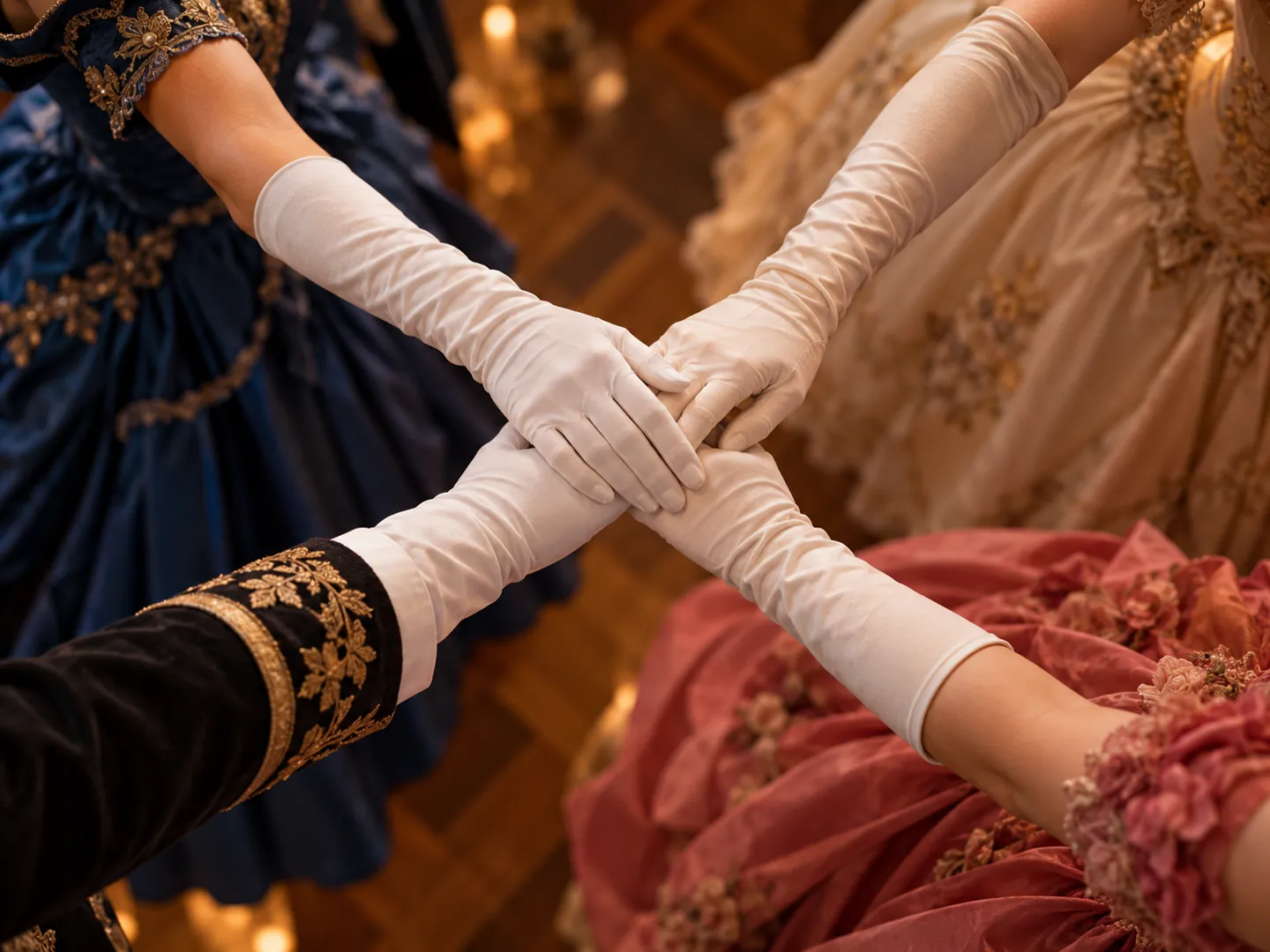
WHERE IT LIVES ON
Videnskab.dk describes the Lancers as a hit at 1860s Copenhagen parties, where Danes added their own fast wheeling section in which the men spin round like a mill. Danish upper-secondary schools still dance it at their annual parties.
Elsewhere, the dance survives in pieces. Videnskab.dk notes that elements live on in the Afro-Caribbean quadrille and American square dance, and the Square Dance History Project records French-Canadian versions for eight couples.
Questions
A square dance for couples, built from set figures. Routledge's manual says a quadrille always has five parts, and that it suits every age because nobody is held in a partner's continual embrace.
Eight: four couples in a square. The manual says the Lancers must be danced by four couples only in each set, though many sets can dance at once. A double version for sixteen also existed.
Videnskab.dk reports it was created in 1817 for a court ball in Dublin, with tunes taken mostly from popular operas, and then rearranged as it spread around Europe.
The name refers to lancers, cavalry soldiers armed with lances. Videnskab.dk says the dance was possibly inspired by, or written for, those soldiers.
Yes. Danish school parties keep it alive, and historical and folk dance groups elsewhere reconstruct it. The Square Dance History Project hosts instructional videos of all five figures.
Updated
ABOUT THIS NAME
doodlelancer.com is part of the DoodleSale portfolio. It isn't in an auction right now, but you can ask about leasing it.